About
Our Story
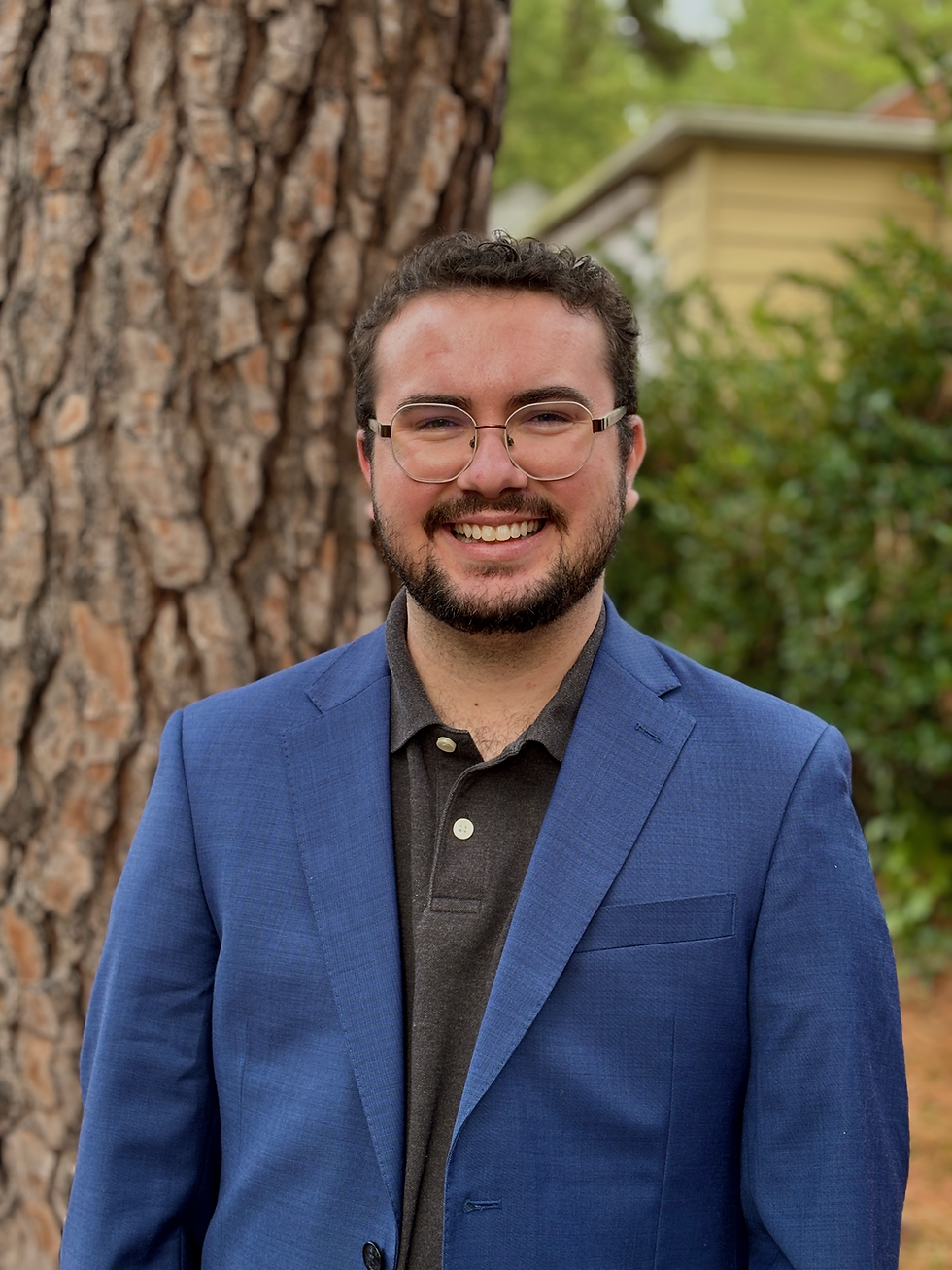
Founded in 2026
Forensic Ed LLC was founded by Morgan Korzik (MSFS) to meet the need of accessible forensic science education for the non-scientist. With backgrounds in forensic science and education, we are driven by these main outcomes:
1. Enable high school forensic science teachers with accurate and relevant information at an appropriate education level for their students.
2. Empower attorneys with forensic science resources focused on education that can be carried forward into future casework.
3. Provide accessible education and training resources for individuals curious about the forensic sciences.
Use of Forensic Science
Forensic science can be thought of as the application of scientific processes in criminal and legal cases. Main applications of the science are to help support an element of a crime, reconstruct events, and to establish a linkage between the victim, suspect, or crime scene. There are a variety of disciplines within the field, including but not limited to:
-
Forensic Biology (Historically called Serology)
-
DNA Analysis
-
Fingerprint Analysis (or Latent Print Analysis)
-
Trace Evidence Analysis
-
Firearms Analysis
-
Toxicology
-
Drug Chemistry
-
Questioned Documents
-
Impression Analysis
-
Digital Evidence Analysis
Forensics requires evidence analysis, which is a scientific process of obtaining information about a sample through experimentation and interpreting the results. Experimentation techniques should be accepted, accurate, precise, and non-destructive to the evidence (if possible) and can involve the use of chemicals, microscopes, robotics, computer software, and other equipment. The data that can be interpreted from experimentation also has specific parameters to dictate what kinds of conclusions can be drawn and the potential limitations in those conclusions.
Practice Areas
Where is Forensic Science Utilized?
Crime Scene
Laboratory
To determine how to sample various evidence items to yield higher quality results.
To analyze evidence and write reports on the results.
Office
Courtroom
To explain various scientific concepts and information in the written reports.
To explain the results of the analysis and their significance to a jury.
The core of forensic analysis involves comparing evidence and reference samples to come to a conclusion of how the two may be related. Evidence samples are of unknown identity and are often collected from a crime scene. Reference samples are of known identity and are usually samples taken from victims, suspects, and persons of interest.
Disciplines have different types of evidence samples, reference samples, and questions that can be answered by comparing the two. Forensic DNA analysis strives to narrow down an individual association between the evidence and reference samples. Source attribution refers to attempting to establish the source of the evidence sample and is based on classifying the evidence. As the number of items that share a classification with the evidence decrease, the level of source attribution increases.
This idea of attributing who exactly the evidence sample came from is individualization, where the attributed individual is the unique classification for the sample (i.e. the classification group consists of that individual alone). Every single individual on Earth (that has ever existed and will ever exist) cannot be tested to prove that DNA is truly unique, so statistical calculations can be used to support the possibility that the evidence originated from a given individual. Sometimes this cannot be answered at all, and other times it cannot be answered fully – hence individualization being a process rather than an absolute. For instance, the evidence recovered may be too damaged and degraded to be suitable for such comparison. Even if a comparison can be made, the amount of data available from the evidence can influence the degree of source attribution.
Conclusions
The following statements are misconceptions and do not accurately reflect how forensic science is used:
-
When forensics is involved, a crime had to occur.
-
All crimes require the involvement of forensic science to be solved.
-
Forensic scientists solve crimes.
-
The main objective of a forensic scientist is to work for the police.
-
The goal of evidence analysis is to end in a conviction.
-
Forensic science is infallible.
